

As Canada’s LNG exports grow, critics raise concerns over human rights abuses linked to major corporate investors.
Kitimat, British Columbia: As Canada tries to position itself as an emerging leader in global liquefied natural gas (LNG) markets, it risks locking in multidecade, multibillion-dollar contracts with companies whose current and past ventures include human rights abuses and environmental damage.
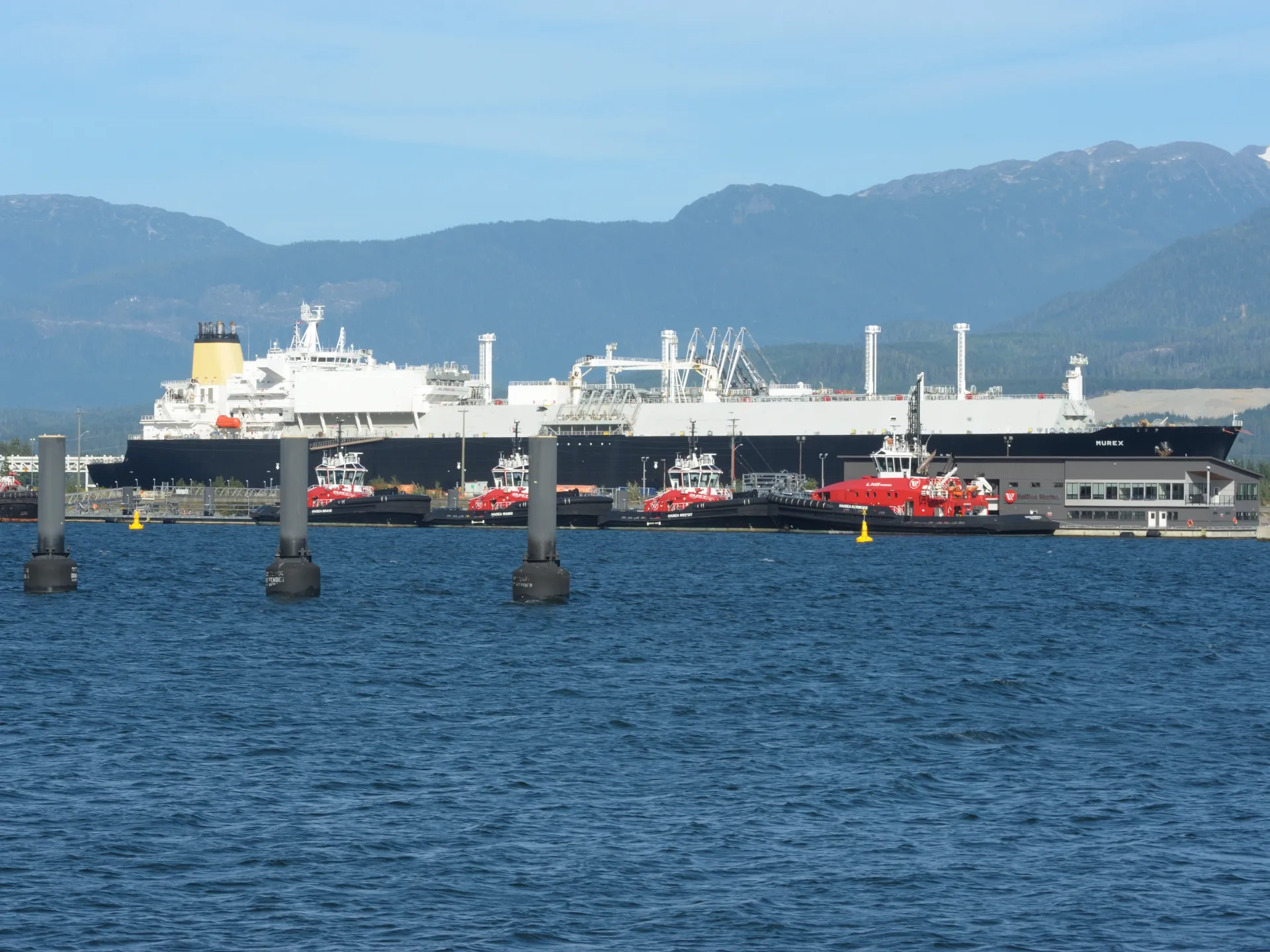
LNG Canada, which began operations in mid-2025 in Kitimat in British Columbia on the country’s west coast, is the nation’s first major export facility.
In late September, it gave the green light to a $33bn expansion which will double production in the coming years at Kitimat.
But the Kitimat plant has had challenges with its flaring equipment since beginning commissioning in late 2024. In 2025, the new liquefaction facility burned 350 million cubic metres of gas due to an issue with its main flare stack.
“The flaring noise was on a whole other level when they were first getting started up,” a resident who asked not to be named said in an interview. “It was just huge, way bigger than I think it was supposed to be.”
“I am devastated about the changes to my home territory,” another resident said. “I can’t always see the stars like I used to from my parents’ place here. My friend returned temporarily, and her asthma has been much worse.”
The residents requested to remain unnamed because Kitimat is a small community and the industrial project is a major employer and donor to local organisations.
The project has political support, especially as Canada faces economic pressures from United States President Donald Trump’s administration, which has unleashed a slew of tariffs on it, including on Canadian steel, lumber and aluminium in 2025 and added an additional suite of tariffs on Canadian products worth $20bn in August, including wine, dairy and textiles.
Since Trump started his tariff campaign, the Canadian government has announced a flurry of deals and agreements aimed at diversifying trade partners and expanding domestic infrastructure developments.
‘It’s all about investment’
Prime Minister Mark Carney’s government recently added two LNG developments – LNG Canada and Ksi Lisims LNG – to its major projects list, promising strong federal support. The Major Projects Office, a dedicated agency, has been established to speed up infrastructure projects deemed to be of national interest.
“Canada is building big again,” Carney said at a news conference in Vancouver following the announcement. “A year ago, the federal government referred LNG Canada Phase 2 to our Major Projects Office. One office. One point of contact. One goal: get to the right decision, rapidly and efficiently. Working with Shell and LNG Canada, British Columbia and First Nations, we have accomplished exactly that.”
Marc Lee, senior economist with the Canadian Centre for Policy Alternatives, said the underlying economics of oil and gas markets over the next 10 to 20 years are ultimately driving those decisions — and maintained the government is unconcerned with companies’ conduct in other countries.
“None of that matters to the federal government,” he said. “It’s all about investment.”
Lee said the ongoing trade war with the US is being used as an excuse to fast-track major projects — and it comes at the expense of environmental protection and community-level impacts.
“I don’t think it’s part of some broader strategic game around diversifying from Trump or supporting the energy transition,” he said, explaining how the Canadian LNG projects predate Trump’s first term in office.
“It’s just pure growth and extraction for very short-term benefit and long-term costs. We’re essentially promising to liquidate this resource that should be the inheritance of British Columbians for hundreds of years into the future, and we’re squandering it all at bargain-basement prices.”
“It’s like this bicycle you have to keep pedalling or you fall off,” he said. “You always need this new capital investment. That’s what the governments are chasing right now.”
Carney’s office declined an interview request and referred questions to the federal government’s Privy Council Office, which did not respond prior to publication.
Construction on the expansion, which includes adding five new compressor stations to the Coastal GasLink pipeline that supplies the export plant, is to begin immediately.
Several of the companies involved in the two projects, either directly or through financing agreements, have murky histories and troubling portfolios. Domestic costs also include accusations of environmental pollution and potential human rights violations.
Since commissioning began in early 2025, a technical problem at the newly built LNG Canada facility led to the plant burning off more than 350 million cubic metres of gas that year, putting it among the world’s highest sources of flaring emissions.
The local community was unaware of the scale or nature of the issue until reporting by the Canadian environmental news outlet The Narwhal revealed the plant had started operations despite identifying an “integrity issue” with its equipment.
LNG Canada is owned by a consortium of five foreign companies: Shell, Petronas, Korea Gas, PetroChina and Mitsubishi. Shell is the majority shareholder.
Like TotalEnergies, Shell signed a deal to purchase two million tonnes of LNG from Ksi Lisims in 2024. The corporation recently bought Arc Resources, a Canadian oil and gas company with assets in northeast British Columbia and Alberta.
Shell’s oil and gas operations in Nigeria are among its more notorious. The United Nations estimates Shell spilled more than 13 million barrels of crude oil in at least 7,000 incidents in the Niger Delta since it started operations there in 1958. Those spills, and the company’s subsequent attempts to evade responsibility, have allegedly devastated the lives and livelihoods of local residents.
Anna Zalik, a professor with York University in Toronto, has been documenting Shell’s conduct in Nigeria for more than 20 years. She said the way the company portrays itself as a “responsible actor in the Canadian context” is disingenuous.
“The firm has been associated with these major human rights violations and all sorts of legal cases around actual violence against communities and severe environmental devastation in Nigeria, and yet tries to act as if their operations here are somehow not the same as their operations there,” she said.
“Their track record demonstrates an attempt to evade responsibility and liability for the pollution that they cause.”
Shell declined an interview request and said the characterisation of its operations “is not one we recognise”.
“Shell is committed to honesty, integrity and respect for people, and to conducting its business in an ethical and transparent manner, in accordance with applicable laws and regulations where we operate,” a spokesperson wrote in an emailed statement.
The spokesperson added its operations in Nigeria included “complex and contested issues” and the allegations “do not reflect the challenging operating environment in the Niger Delta at the time, including large-scale oil theft, sabotage and illegal refining carried out by organized criminal gangs”.
Shell’s LNG facility in northwest British Columbia is supplied by the contentious Coastal GasLink pipeline, built by TC Energy between 2019 and 2024 across Wet’suwet’en territories without the consent of the nation’s Indigenous leaders, or Hereditary Chiefs. In 2020, construction of the 670-kilometre (420-mile) pipeline became the focal point for Indigenous-led protests, arrests and nationwide outrage.
KKR, a New York investment firm with vast global reach, is a majority owner of the pipeline. Last year, KKR faced controversy after its acquisition of Superstruct Entertainment, the parent company of numerous music festivals and franchises including the electronic music outfit, Boiler Room, and festivals like Barcelona’s Sonar and London’s Field Day. Dozens of artists also accused KKR of promoting illegal occupation of Palestinian territory.
At the time, KKR had holdings in a German media company, Axel Springer, which advertises real estate developments in the occupied West Bank, where Israel has been accused of ethnic cleansing as it forcibly displaces Palestinian residents.
KKR said it does not have real estate interests in the West Bank and no longer invests in Axel Springer. Whether the investment company retains financial interests in companies linked to Israeli defence contractors and cyber security firms that provide support to the Israeli military remains unclear.
As part of LNG Canada’s proposed expansion, the pipeline operator would install compressor stations along the route, including on Wet’suwet’en territories, to double the amount of gas it currently transports. In addition to its holdings in the Coastal GasLink pipeline, KKR is one of three investment companies vying for a purchase of Shell’s shares in LNG Canada, which would include the proposed expansion.
Meanwhile, Ksi Lisims would be supplied by the Prince Rupert Gas Transmission pipeline, an 800-kilometre (500-mile) linear project that would cross numerous First Nations territories. The pipeline and LNG facility are co-owned by Nisga’a Lisims, an Indigenous government in northwest British Columbia. Some of the neighbouring nations claim they were not adequately consulted and do not consent to the projects.
In 2025, French multinational TotalEnergies signed an agreement with Ksi Lisims LNG to buy two million tonnes of liquefied gas per year, while simultaneously acquiring a 5 percent stake in the project’s parent company, Texas-based Western LNG.
TotalEnergies has been accused of “complicity in war crimes, torture and enforced disappearance” at its LNG facility in Mozambique, according to a criminal complaint filed by the European Center for Constitutional and Human Rights (ECCHR) in late 2025. The complaint, filed with France’s national antiterrorism prosecutor, centres around the company’s complicity in the so-called “container massacre” in 2021. There is no update on the investigation by the prosecutor.