
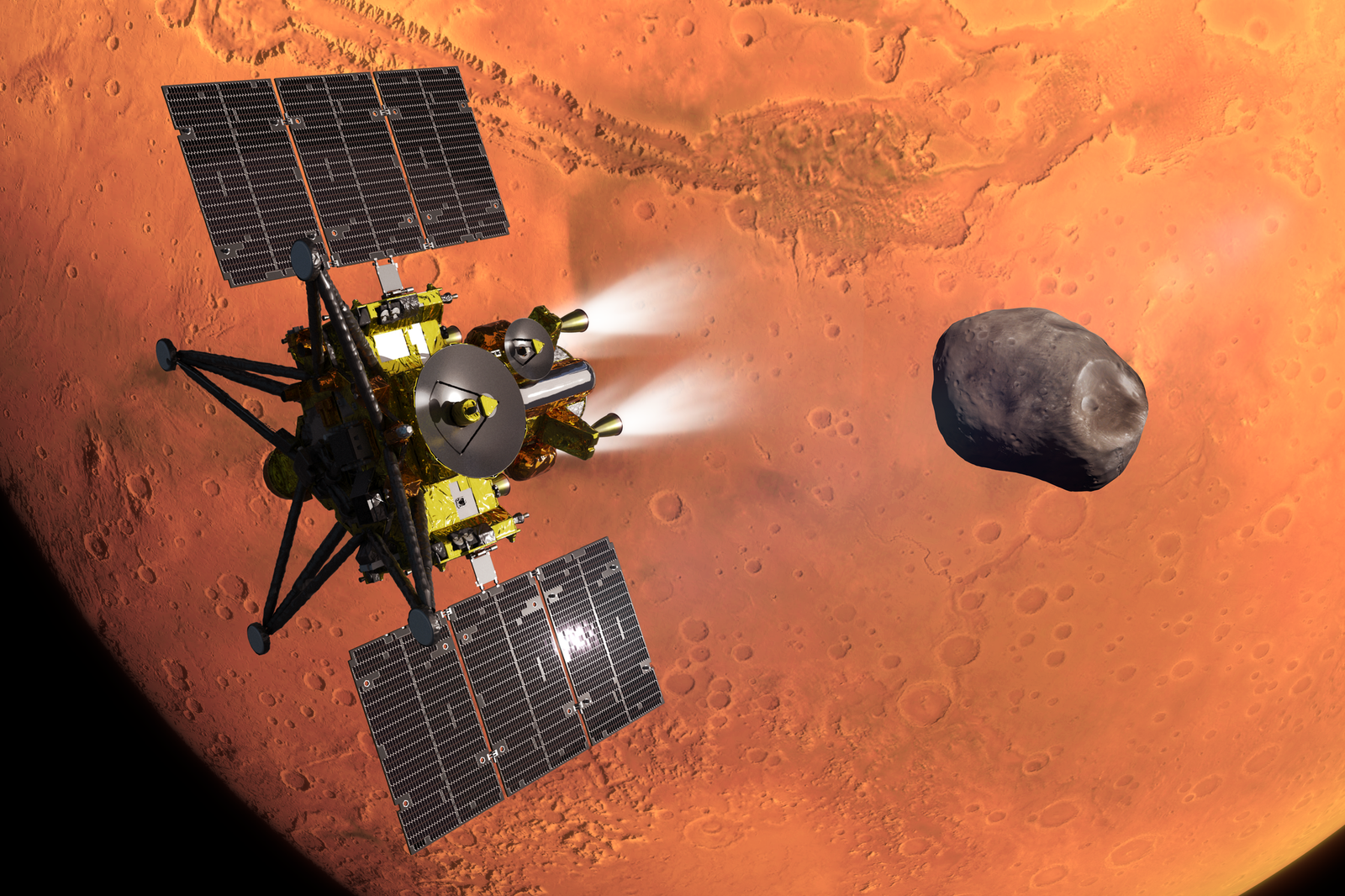
NASA is working with Japan on a mission to study the moons of Mars. The project will bring samples of Phobos back to Earth to reveal its origins.
NASA is partnering with the Japan Aerospace Exploration Agency for a new mission. This project explores the two moons of Mars, Phobos and Deimos. It aims to reveal their origins and history.
Also, the mission will bring a sample of Phobos back to Earth. This work builds on NASA’s long history of studying the Red Planet. Officials believe these samples will change how we view the Mars system.
Next, NASA provides several key tools for the mission. One is the MEGANE spectrograph. This device measures neutrons and gamma rays on the surface of Phobos. It helps scientists see what the moon contains.
Meanwhile, NASA also supplies a special pneumatic sampler. This tool uses nitrogen gas to collect surface material. It works alongside another sampler from Japan to gather deep core samples.
Then, the Deep Space Network will provide navigation and communication support. NASA is also funding several American scientists for this research team. These experts will study the data alongside international partners.
Furthermore, experts have debated the origins of these moons for years. Some think they formed from a massive impact on Mars. Others believe Mars captured them as asteroids long ago.
After that, the spacecraft will arrive at Mars in August 2027. It will spend time surveying the moons in great detail. The team plans to collect a sample by December 2028.
Finally, the craft will return to Earth in 2031. NASA will keep about 15% of the samples at its laboratory in Houston. Scientists will use these materials for research for many decades.
The mission helps us understand how the inner planets gained water. It also sheds light on the early days of our solar system. This work is vital as NASA prepares for future human missions to Mars.