
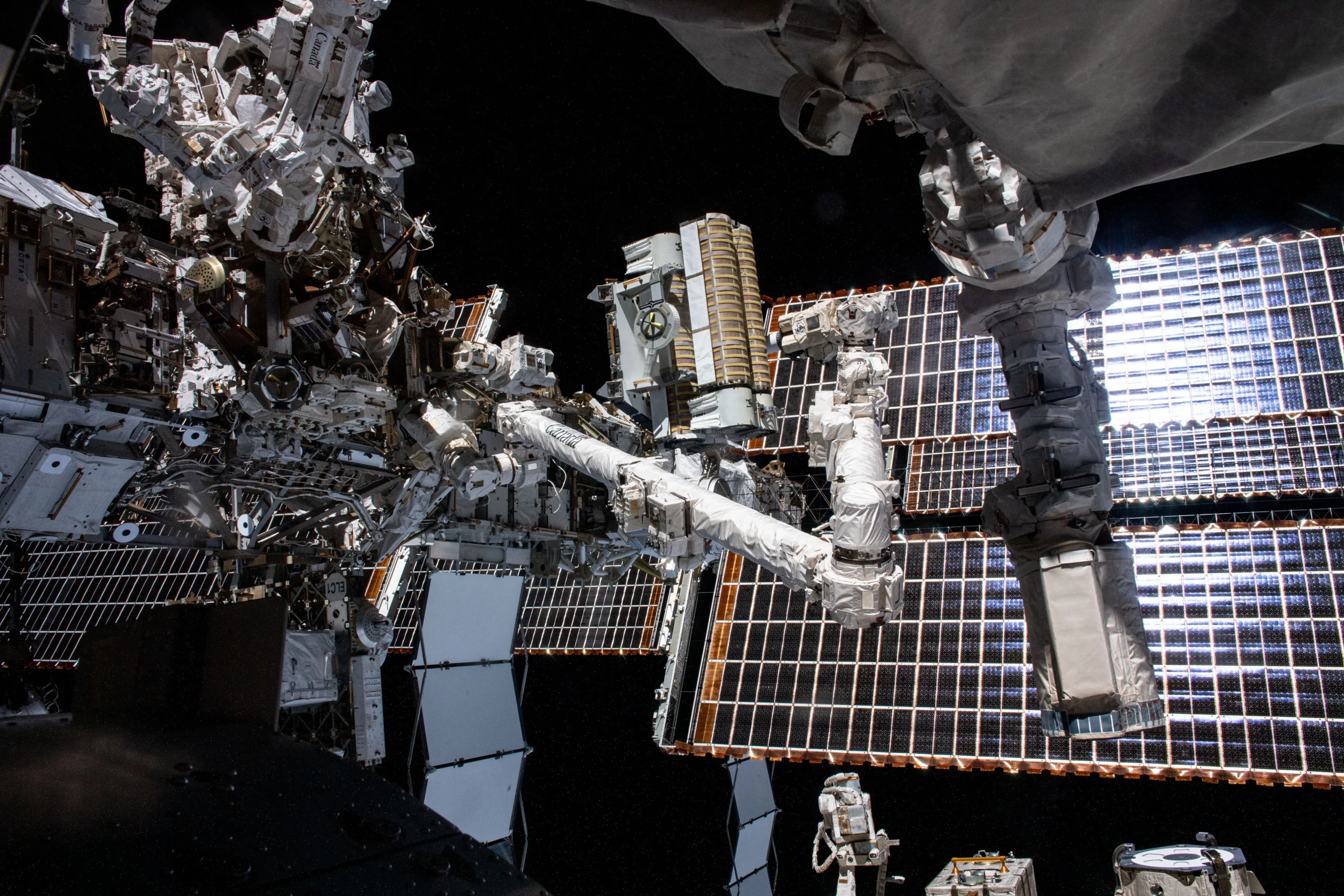
NASA is boosting the International Space Station's power capacity by installing new roll-out solar arrays to support ongoing research and future exploration.
The International Space Station orbits 250 miles above our planet. The Sun provides essential energy for this laboratory. This power sustains life support systems and daily station operations.
Also, this energy supports hundreds of scientific research projects. These studies help people on Earth and prepare astronauts for deep space travel. NASA recently improved the station's electrical grid.
Next, engineers introduced the International Space Station Roll Out Solar Arrays, or IROSAs. NASA tested this new technology in 2017. The design is lightweight and very compact for travel.
Then, the arrays launch as small cylinders. They unfurl like yoga mats once they reach space. This self-deploying system reduces risks during the installation process.
However, the new arrays are smaller than the original station panels. Each IROSA is about half the size of older versions. Even so, they produce 28 kilowatts of extra power.
Meanwhile, crews installed six of these units between 2021 and 2023. NASA requested more arrays later that year to meet growing energy needs. A SpaceX mission delivered this final set recently.
As a result, the station now features eight total IROSAs. These units provide over 160 kilowatts of additional power. This electricity keeps research and station operations running smoothly.
Finally, this upgrade supports NASA’s future exploration goals. The station serves as a vital testbed for new equipment. It helps scientists develop tools for missions beyond low Earth orbit.
Still, these arrays represent a major step forward. They strengthen the legacy of the space station in orbit. NASA will use these lessons for future travel across the solar system.