
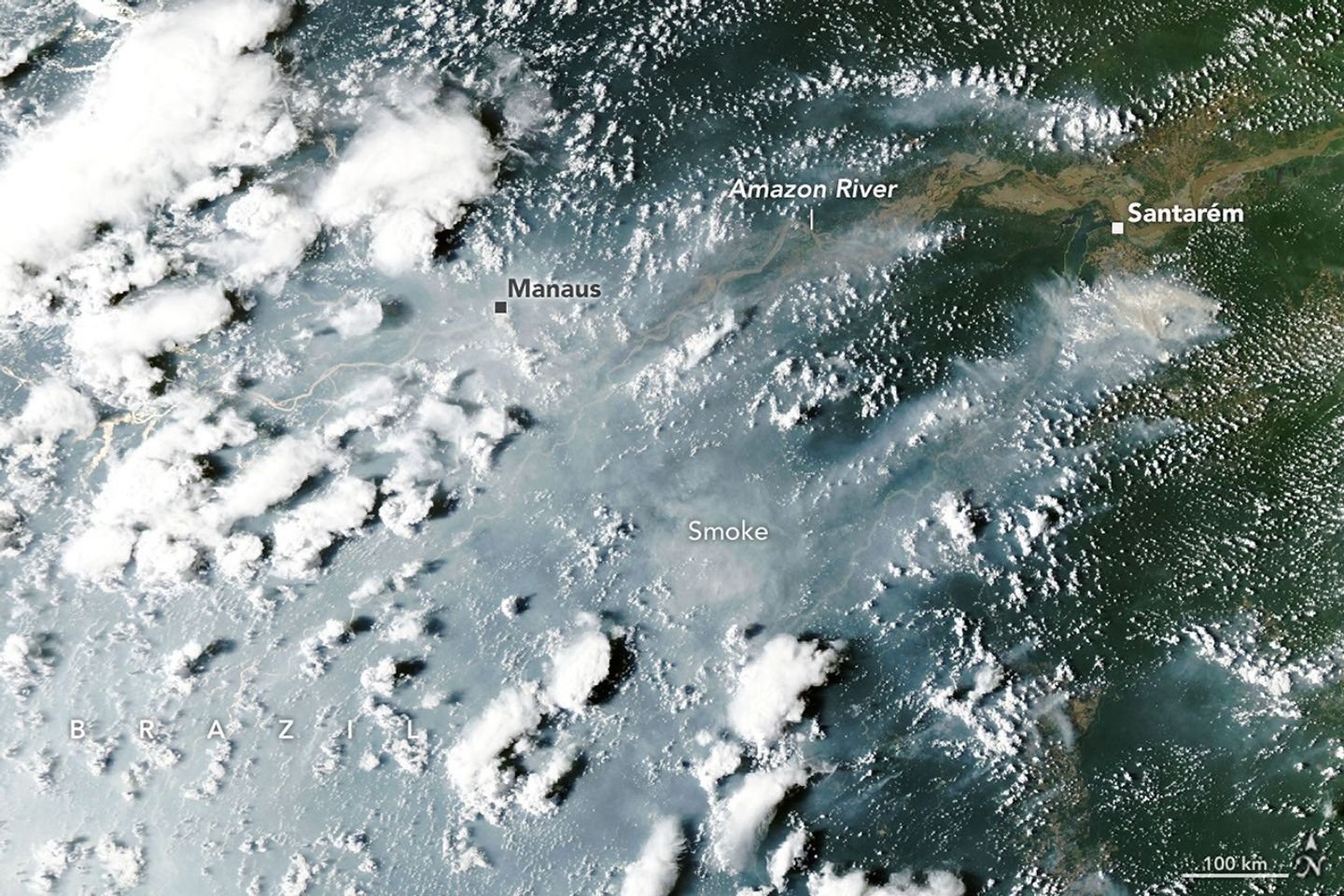
A severe drought linked to El Niño has triggered a dangerous fire season in the Amazon rainforest, prompting safety concerns for millions of residents.
The El Niño climate pattern often brings long periods of drought. This dry weather leaves the Amazon rainforest very vulnerable to fire. Scientists now believe the region has entered a difficult and severe fire season.
Also, satellites began detecting more fire activity in September 2026. These fires appeared in the central and eastern parts of the Amazon. Smoke emissions rose sharply near cities like Manaus and Santarém.
Next, heavy smoke covered the city of Manaus on October 12, 2026. The air quality became extremely poor for the local population. Officials closed schools and canceled many sports events to protect citizens.
Meanwhile, experts describe this trend as a cascade effect in the tropics. Fires often start in Indonesia before spreading to the Amazon region. Researchers identified this specific pattern during previous El Niño events.
After that, the fires hit the states of Pará and Amazonas. Experts expect the next wave to move north by November. Areas in Venezuela, Guyana, and Suriname could face risks during this time.
Still, some of these forests burned during past El Niño events. Repeated fires cause serious damage to the local ecosystem. Many trees cannot handle the stress of constant burning.
Then, the situation should improve once the rainy season returns. This usually happens in late December or early January. Until then, experts urge people to avoid starting any new fires.
Finally, scientists note that humans start almost all these fires. The current drought makes these small fires grow out of control quickly. Many fires started as simple land clearing but spread into the dry forest.
As a result, researchers are working to track these hidden fires. Dense smoke often hides fire activity from satellite sensors. Experts are using new methods to find fires that official data might miss.