
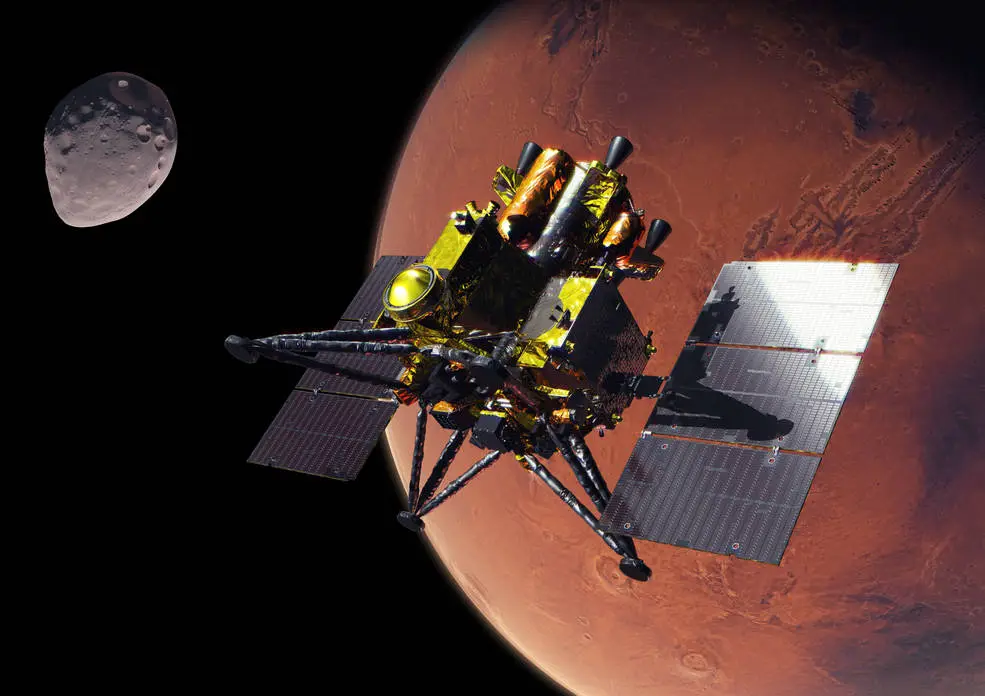
NASA joins Japan for a mission to Mars' moons as other surface projects reach new heights.
NASA officials plan a major update regarding a new mission to Mars. The space agency will soon details about the Martian Moons eXploration project. Japan leads this mission to study the moons of the Red Planet.
Meanwhile, the mission launch remains on track for mid-October. NASA contributes key technology to help the spacecraft succeed. Experts will explain these systems during a media teleconference later this week.
Why this matters
This mission represents a new level of global space cooperation. Japan and the United States aim to unlock secrets held by the moons Phobos and Deimos. These small moons offer clues about how Mars formed long ago.
Also, this mission tests advanced tools for collecting samples in space. NASA provides a special sensor to study the chemical makeup of the moons. These instruments help scientists understand the history of our solar system.
Then, the project highlights the importance of the Discovery Program. This NASA effort funds high-value science projects with clear, focused goals. It allows space agencies to work together on big challenges.
However, space exploration remains a difficult task. Scientists must manage extreme distances and harsh conditions near Mars. Every successful sample return mission expands our knowledge of the universe.
Mission goals and technology
The spacecraft carries several high-tech tools for the journey. NASA provided a gamma-ray and neutron spectrometer called MEGANE. Johns Hopkins experts developed this device for the mission.
Next, the ship includes a special surface sampler mechanism. Honeybee Robotics built this tool to grab materials from the moons. This technology ensures the craft can safely secure samples for their trip back to Earth.
Furthermore, NASA provides communications support through the Deep Space Network. This system keeps the spacecraft connected to Earth over millions of miles. Teams also help navigate the ship to its destination.
Updates from the Red Planet
Meanwhile, other missions on Mars continue their hard work. The Curiosity rover recently reached a major height record. It climbed one kilometer above the floor of Gale Crater.
After that, the rover captured new images of the landscape. These photos show the geologic layers of Mount Sharp. They help researchers understand how the crater changed over time.
Still, the rover stays busy with daily science tasks. It drills into rocks to find evidence of past water. These findings add context to the new mission arriving in 2027.
How we got here
- 2014: Curiosity begins its climb up the foothills of Mount Sharp.
- September 2026: Curiosity captures new panoramic images of the crater floor.
- August 2026: Curiosity reaches a milestone of one kilometer in elevation.
- October 2026: NASA schedules a media briefing to preview the upcoming Martian Moons mission.
- October 19, 2026: The Martian Moons eXploration mission is scheduled for launch from Japan.
What happens next
Now, NASA will hold its planned teleconference to discuss the partnership. Journalists will learn more about the specific roles of United States scientists. This briefing sets the stage for the upcoming launch.
After that, the mission will begin its long journey to Mars. The spacecraft is expected to arrive at the Red Planet in August 2027. It will then start its detailed survey of the two moons.
Finally, the team aims to collect samples by December 2028. These precious materials should return to Earth by 2031. Researchers will then study them for many years to come.