

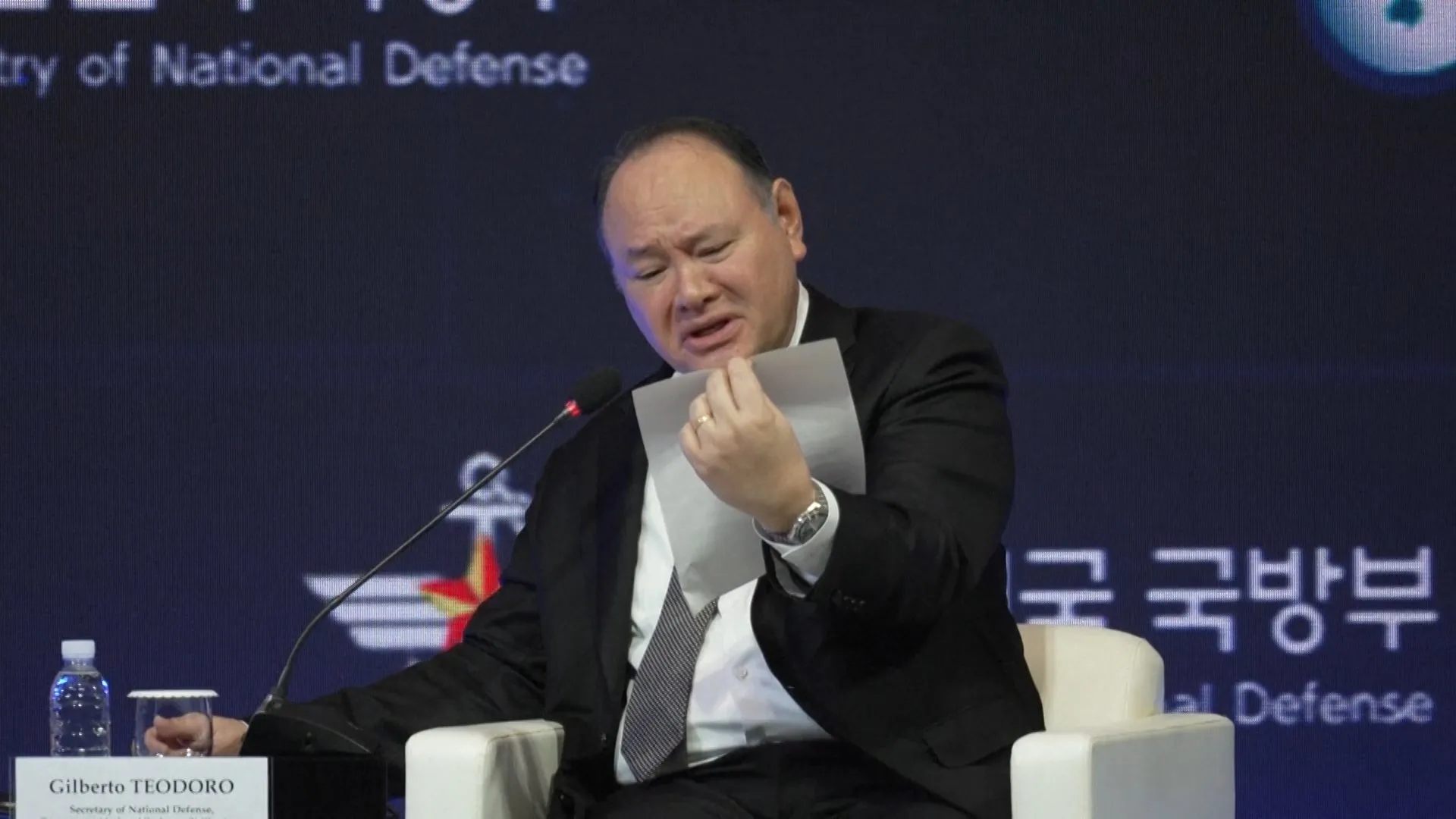
Philippine Defense Secretary Gilberto Teodoro publicly condemned China's coercive tactics after receiving a provocative note during a security forum in Seoul.
During a high-profile security forum held in Seoul, the Philippine Secretary of National Defense, Gilberto Teodoro, found himself at the center of an unexpected diplomatic incident. While participating in a panel discussion, a Chinese military attache approached the official to deliver a written note. The document, which was presented directly to the Secretary, contained a formal rejection of the 2016 international arbitral ruling regarding maritime territorial claims in the South China Sea.
The incident highlighted the persistent friction between Manila and Beijing, as the Chinese government continues to challenge the legal consensus established nd disruptive manner during a multilateral security event, Chinese representatives signaled a continued refusal to acknowledge the findings of the 2016 tribunal, which invalidated Beijing's expansive historical claims over the contested waters.
In response to the delivery of the note, Secretary Teodoro publicly decried the actions of the Chinese government, labeling the maneuver as an act of coercion. He emphasized that such behavior is consistent with a broader pattern of bullying and aggressive posturing that the Philippines has faced in the West Philippine Sea. The Secretary asserted that these methods are intended to intimidate neighboring nations and undermine the sovereignty of the Philippines.
The defense chief’s remarks reflect a growing frustration within the Philippine government regarding Beijing's maritime conduct. Manila has repeatedly called for China to adhere to international law, specifically the United Nations Convention on the Law of the Sea (UNCLOS), which served as the foundation for the 2016 ruling. Instead of engaging in diplomatic dialogue, the Secretary suggested that China’s reliance on coercive tactics only serves to destabilize the region and alienate other nations with similar maritime interests.
The South China Sea remains one of the most volatile geopolitical flashpoints in the world. Beijing claims sovereignty over the vast majority of the sea, including areas that fall well within the Philippines' Exclusive Economic Zone (EEZ). Despite the 2016 ruling, which explicitly stated that China's "nine-dash line" has no legal basis under international law, Beijing has maintained its presence in the region through the construction of artificial islands and the deployment of coast guard vessels.
For the Philippines, the defense of its maritime territory is a matter of national security and economic survival. The nation relies heavily on the South China Sea for fishing rights and potential energy exploration. As these resources become increasingly contested, Manila has sought to strengthen its security partnerships with international allies, viewing collective diplomatic pressure as the most effective counter-strategy to Beijing's expansive territorial ambitions.
The incident in Seoul serves as a microcosm of the larger struggle for influence in the Indo-Pacific region. As China continues to assert its presence through gray-zone tactics, regional forums have become increasingly tense environments. The move to hand a physical note to a cabinet-level official during a panel discussion is seen strength rather than foster cooperation.
Moving forward, the confrontation at the forum is likely to further harden the Philippine stance on regional security. Secretary Teodoro’s decision to call out the behavior publicly suggests that Manila is moving away from quiet diplomacy in favor of a more transparent, vocal opposition to Chinese policies. This shift underscores the difficulty of maintaining regional peace when major powers refuse to abide