

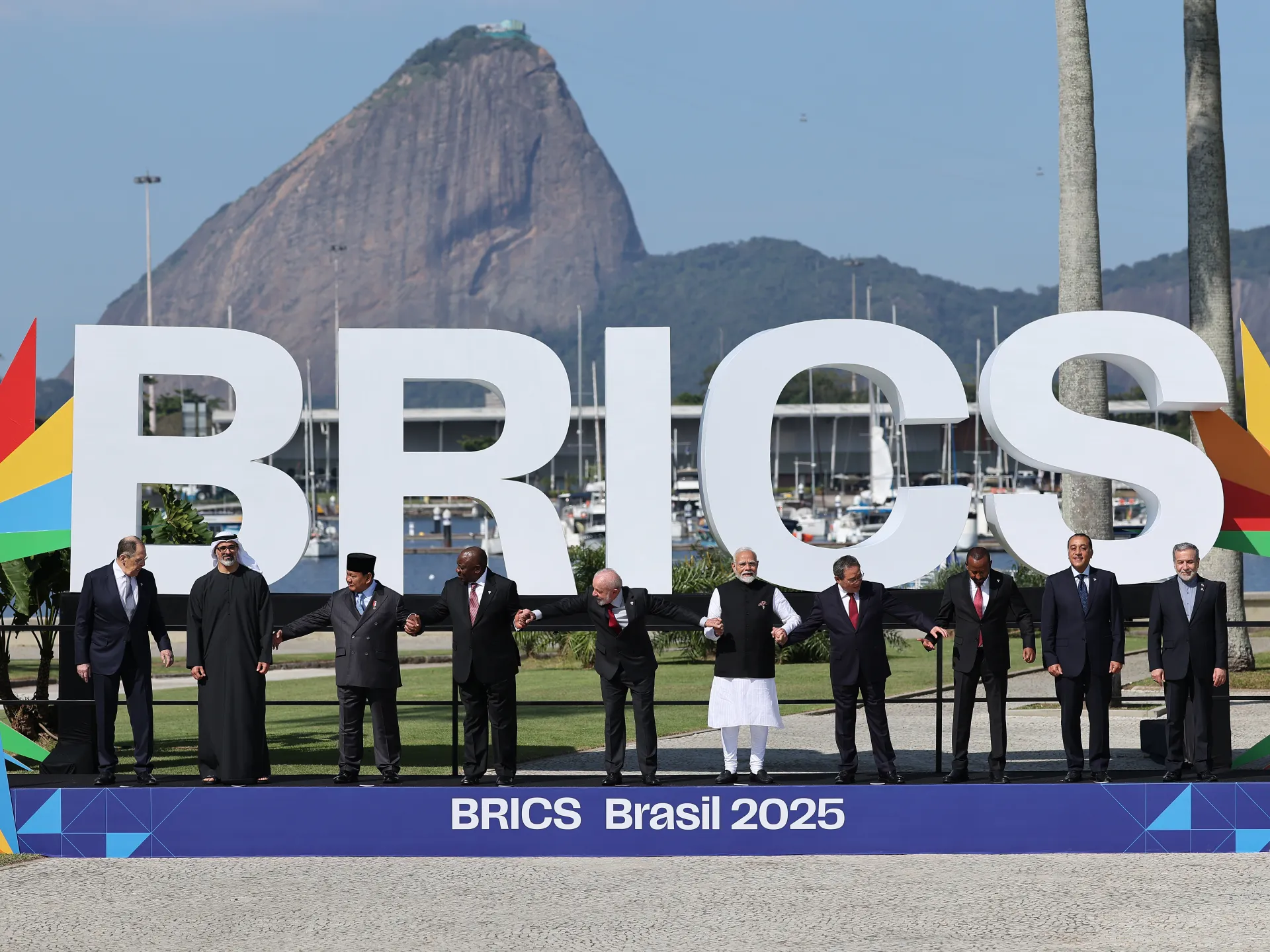
With the Iran-US conflict intensifying, the upcoming BRICS summit in New Delhi offers a rare venue for potentially reviving diplomatic efforts toward a regional ceasefire.
As the international community watches the escalating conflict between Iran and the United States, the upcoming BRICS summit in New Delhi appears to be one of the few remaining forums where a de-escalation strategy could be forged. With regional tensions reaching a fever pitch following recent strikes on Kuwait, Iranian oil tankers, and critical infrastructure, the gathering of world leaders on September 12 presents a rare opportunity for direct, high-level engagement. The presence of both Iranian President Masoud Pezeshkian and representatives from the United Arab Emirates creates a unique proximity that is rarely seen in current diplomatic channels.
While many Western analysts have dismissed the summit as a mere photo opportunity for a bloc perceived as lacking a unified agenda, this perspective overlooks the practical diplomatic history of the last six months. Previous attempts at stabilizing the region, such as the Islamabad Memorandum, failed not because the machinery of mediation was faulty, but because of technical disagreements regarding the interpretation of specific articles. The infrastructure used to build those prior ceasefires will be physically represented in New Delhi, providing the only viable platform for a potential breakthrough.
China occupies a unique position in this conflict, driven de oil and a significant trading partner for the Gulf states, Beijing is uniquely exposed to the volatility caused ity of energy flows and trade routes, making its mediation efforts more acceptable to both Tehran and Abu Dhabi. This economic necessity provides a pragmatic incentive for China to pursue a functional ceasefire that serves the interests of all parties involved.
Critics of Beijing point to its supply of dual-use technology to Iran and its relative silence regarding civilian casualties in the Gulf as evidence of a biased approach. However, the argument for Chinese mediation is not based on moral superiority, but on the effectiveness of its position. A mediator with significant commercial skin in the game and no stated interest in regime change is often more effective than those driven nt is viewed
Beyond the immediate military conflict, the summit serves as a venue for addressing the financial isolation of nations excluded from dollar-denominated payment infrastructures. The war has acted as a catalyst for countries to seek alternatives to the SWIFT system, with China’s cross-border payment system seeing record volumes. India’s push for integrating fast-payment systems among BRICS members further underscores the desire to reduce reliance on traditional Western financial networks, which are increasingly used as tools of geopolitical pressure.
While the dollar remains the dominant global currency, the demand curve is shifting. Nations across the Global South are increasingly calculating the costs of potential exclusion from Western financial systems. o demonstrate that the BRICS bloc can provide meaningful alternatives. For countries facing bilateral trade pressures and tariffs, the development of these shared financial pathways is not just a policy preference but a matter of strategic necessity.
The path forward in New Delhi will be fraught with challenges, as evidenced hing a consensus between nations with divergent interests requires a disciplined approach to what is achievable. Rather than aiming for comprehensive resolutions that may be impossible to finalize, the focus should be on practical steps, such as navigation agreements and specific timelines for payment linkages.
If the summit can move beyond the posturing that characterizes much of international diplomacy, it could provide a desperately needed off-ramp for the current attrition. A reconstruction plan backed than isolated proposals. the conflict, the New Delhi summit may prove to be the most critical diplomatic event of the year.